· 2 min read
Quartet Voluté: Context Engineering for a Small Business Inbox
An AI agent drafts replies to Quartet Voluté's enquiries. Its drafts are good because it gathers the right context fresh on every run, and because a person still decides what gets sent.
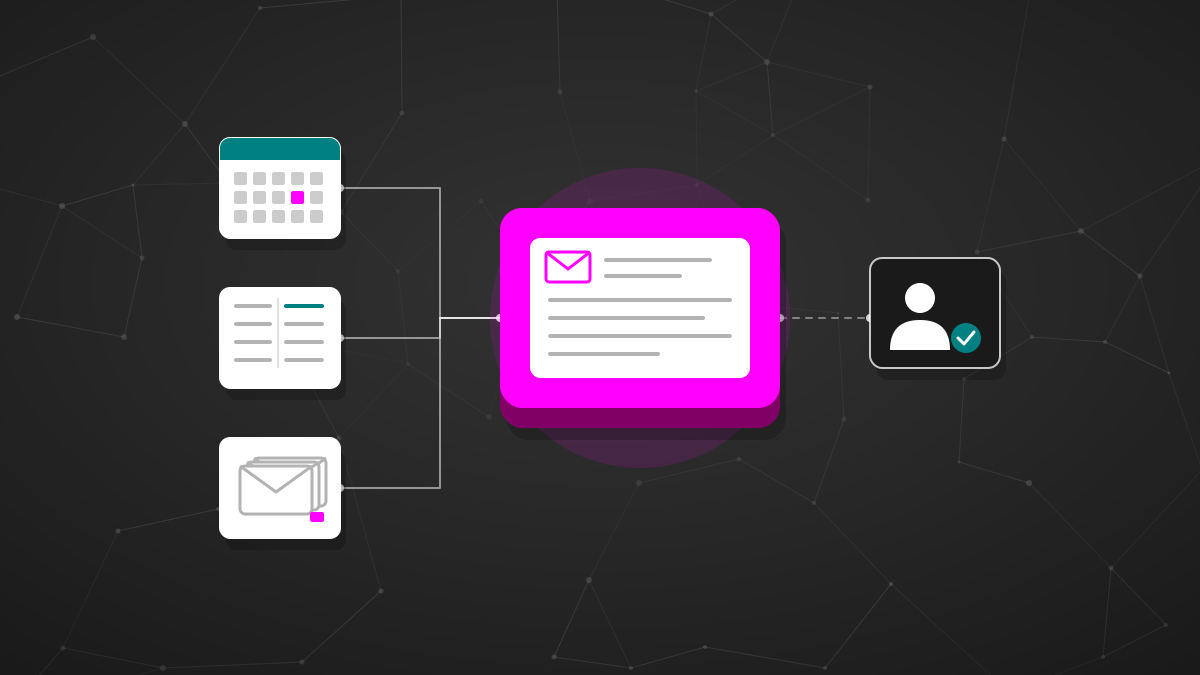
The enquiry inbox
Quartet Voluté gets most of its bookings through an enquiry form. Answering each one used to be manual: open the email, check the diary to see if we're free, look up the current fees, work out a quote, then write a reply in our usual tone. None of it is hard, but it's grunt work, and it's the same steps every time.
Now a Claude scheduled task does those steps a few times a day and leaves a draft reply in the thread. One of us reads it, tweaks it and sends it. So far, the drafts have been a couple of small edits away from sendable.
Better context, better drafts
A language model can write a polite email about anything. What it can't do on its own is know whether we're free on the 14th, or what we charge this year. A reply without that is just a template, and someone still has to do the real work.
So the agent gathers its context fresh on every run, from the places the team already keeps it. It connects to our Google services and the quartet's admin app to check the diary and the current fees. Nothing gets copied into its instructions to go stale. When the fees change, someone updates them where they always have, and the next draft uses them.
Tone works the same way. Before drafting, the agent reads our last few replies and uses them as examples. If we start writing differently, the drafts follow, without anyone rewriting a style guide.
Built around how people actually work
Before drafting, the agent makes sure nobody has already picked the enquiry up. Looking in the thread isn't enough, because people don't all reply the same way: some answer in the thread, others start a fresh email to the client. So it checks more than one place, including for a reply someone is already writing.
Not everyone in the quartet is technical, and they shouldn't have to change how they use email to suit a tool. The tool should fit around the people.
Context informs, people decide
The diary check changes the wording of a draft, never whether there is one. If we look free, the draft can say so. If there's a clash, the draft is still written, just without promising anything, and the enquiry is labelled so whoever picks it up can see why. Turning a gig down, or rearranging players to fit it in, is a human call.
That's deliberate. Our business is built on strong human relationships, with couples planning a wedding and families arranging a funeral. The agent never sends anything. It takes away the checking and the typing, so our time goes on the part that matters: talking to people.
Takeaways
- Fetch context at run time. Read facts like fees and availability from where they live, not from a copy in the prompt.
- Adapt to people, not the other way round. Design for how the team really behaves, mess included.
- Keep a human on the send button. Let the agent do the grunt work and leave the judgement to people.